
Space Industry Weekly: Major Rocket Explosion Shakes Launch Sector
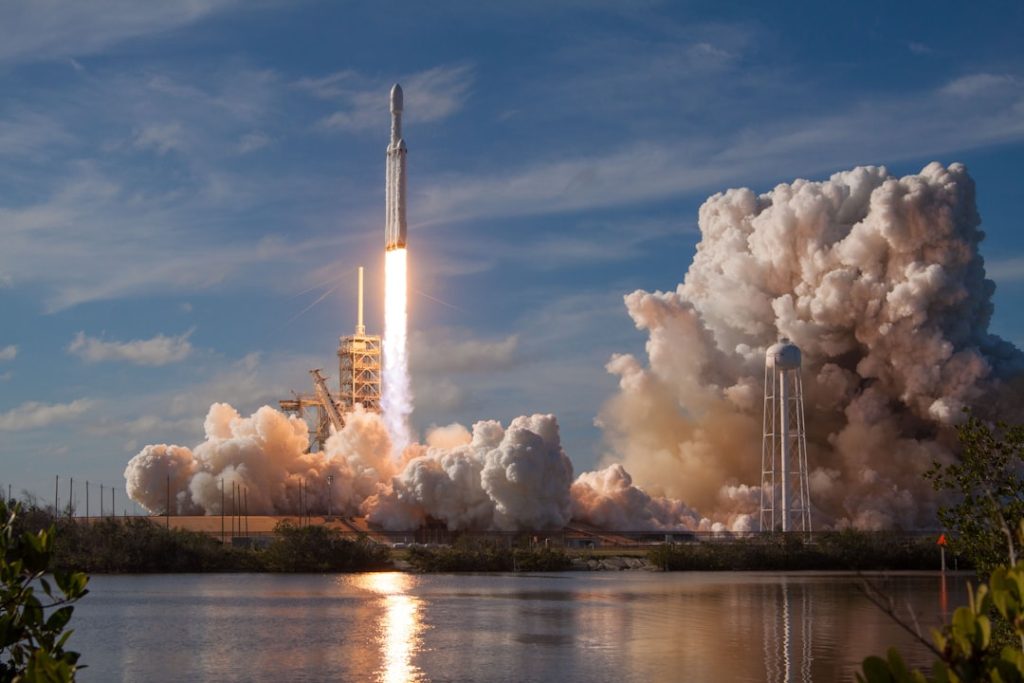
Launch Infrastructure Crisis Highlights Industry Vulnerabilities
The space industry witnessed a catastrophic event this week when a major orbital-class rocket exploded during ground testing at Cape Canaveral, Florida. This disaster underscores what I believe is a critical weakness in our current launch infrastructure – we’re putting too many eggs in too few baskets. The explosion has effectively grounded an entire rocket program and destroyed crucial launch pad facilities, demonstrating how quickly years of progress can vanish in seconds.
This incident should serve as a wake-up call for investors and space companies alike. While spectacular failures grab headlines, they reveal the inherent risks of the commercial space sector that many overlook during boom periods. For established aerospace contractors and their shareholders, this represents both a cautionary tale and potential opportunity as launch capacity suddenly becomes more constrained.
China’s Space Debris Problem Demands International Attention
A concerning trend has emerged regarding orbital debris management, with Chinese space operations contributing significantly to the growing problem of space junk. Analysis shows that rocket body mass from Chinese launches in long-lived orbits has increased from under 100 metric tons to 252 metric tons over just five years.
This issue matters more than most people realize. While China races to deploy satellite megaconstellations to compete globally, their apparent disregard for established debris mitigation practices threatens everyone’s access to space. I think this represents a fundamental failure of international space governance that will only worsen without coordinated pressure. For satellite operators and space insurance companies, this trend should be deeply alarming – more debris means higher collision risks and operational costs for everyone.
The problem becomes exponentially worse when you consider China may launch over 1,000 rockets in the next decade for constellation deployment. This isn’t just an environmental issue; it’s an economic threat to the entire commercial space industry.

Military Seeks Advanced Propulsion Technologies
The Defense Advanced Research Projects Agency has awarded a $16.5 million contract for developing controllable solid rocket motor technology. This “Burn n’ Go” program aims to create propellant-embedded thrust control systems that can be adjusted after manufacturing.
While this might seem like niche military technology, I believe it has broader implications for the commercial launch sector. The ability to dynamically control solid rocket performance could revolutionize cost-effective launch solutions, particularly for smaller payloads. However, the technology remains years away from practical implementation, making it more relevant for defense contractors than immediate commercial applications.
Suborbital Tourism Shows Signs of Life
Virgin Galactic has resumed flight operations with its first-generation spacecraft for pilot training purposes, preparing for the debut of their next-generation Delta-class vehicle expected this summer. This represents a pragmatic approach to maintaining operational readiness during fleet transitions.
Honestly, I’m skeptical about the long-term viability of the suborbital tourism market. While the technology is impressive, the addressable market remains extremely limited to ultra-wealthy individuals seeking brief space experiences. For investors, this sector feels more like a luxury novelty than a sustainable business model, especially when orbital capabilities become more accessible.
European Launch Capabilities Face Development Challenges
German startup Rocket Factory Augsburg continues developing their RFA One launcher, recently testing upgraded engine components despite not yet completing their first launch attempt. The company aims to double engine thrust while maintaining the same mass and cost profile.

This situation perfectly illustrates the challenges facing new launch providers. While incremental improvements sound promising, the company hasn’t even proven their basic rocket design works. For potential customers, betting on unproven launch providers carries significant schedule and mission risks that established operators simply don’t present.
International Space Station Operations Expand
China launched three astronauts to their Tiangong space station, including plans for one crew member to remain in orbit for a full year. Meanwhile, NASA continues expanding its crew transportation contracts with SpaceX, essentially acknowledging that Boeing’s Starliner program has failed to provide the reliable second option originally envisioned.
The contrast between China’s steady progress and Boeing’s ongoing struggles tells a broader story about space program execution. For NASA and its partners, the lack of crew transportation redundancy creates operational vulnerabilities that could impact International Space Station operations.
Military Launch Capacity Concerns
Air Force leadership has identified the need for additional heavy-lift launch sites to accommodate growing military space requirements. Current facilities at Cape Canaveral and Vandenberg are approaching capacity limits, creating potential bottlenecks for national security missions.
This development signals significant infrastructure investment opportunities, though the timeline for new military spaceports will likely span many years. For aerospace contractors specializing in ground systems and launch infrastructure, this represents a substantial potential revenue stream that’s worth monitoring closely.